One hub for every team role: moving to SDD
· 2 min read · SDD · OpenSpec · Git
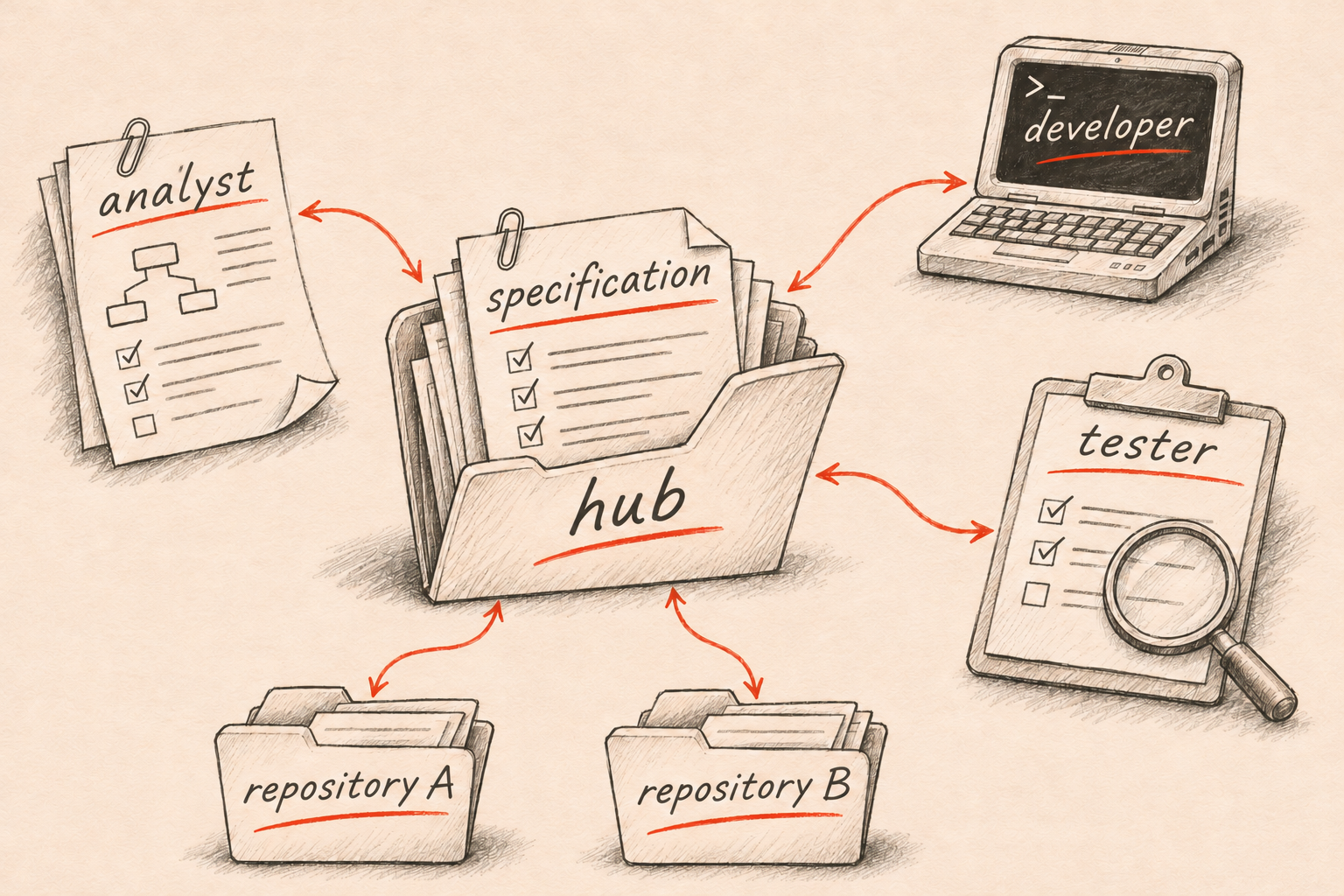
Development had its own repository, testing had another, and analysts wrote requirements in Confluence. For the move to SDD, I created a master repository and connected the development and test repositories as Git submodules. It became the team's shared entry point.
A shared hub for different roles
We put together a master specification for the product in the hub. It lives in Git, and we describe changes for individual tasks as delta specifications. I use OpenSpec for that.
From here, the agent can read the master specification, application code and tests.
Reconstructing the product's existing behaviour
I collected all the existing requirements documentation through MCP and gave the agents the entire codebase to examine. I used interviews to document the product's interactions and architecture.
Some of the documentation was out of date and did not match the code. When reconstructing the initial master specification, I treated the code as the source of truth: the specification had to describe how the product actually worked.
Working with changes
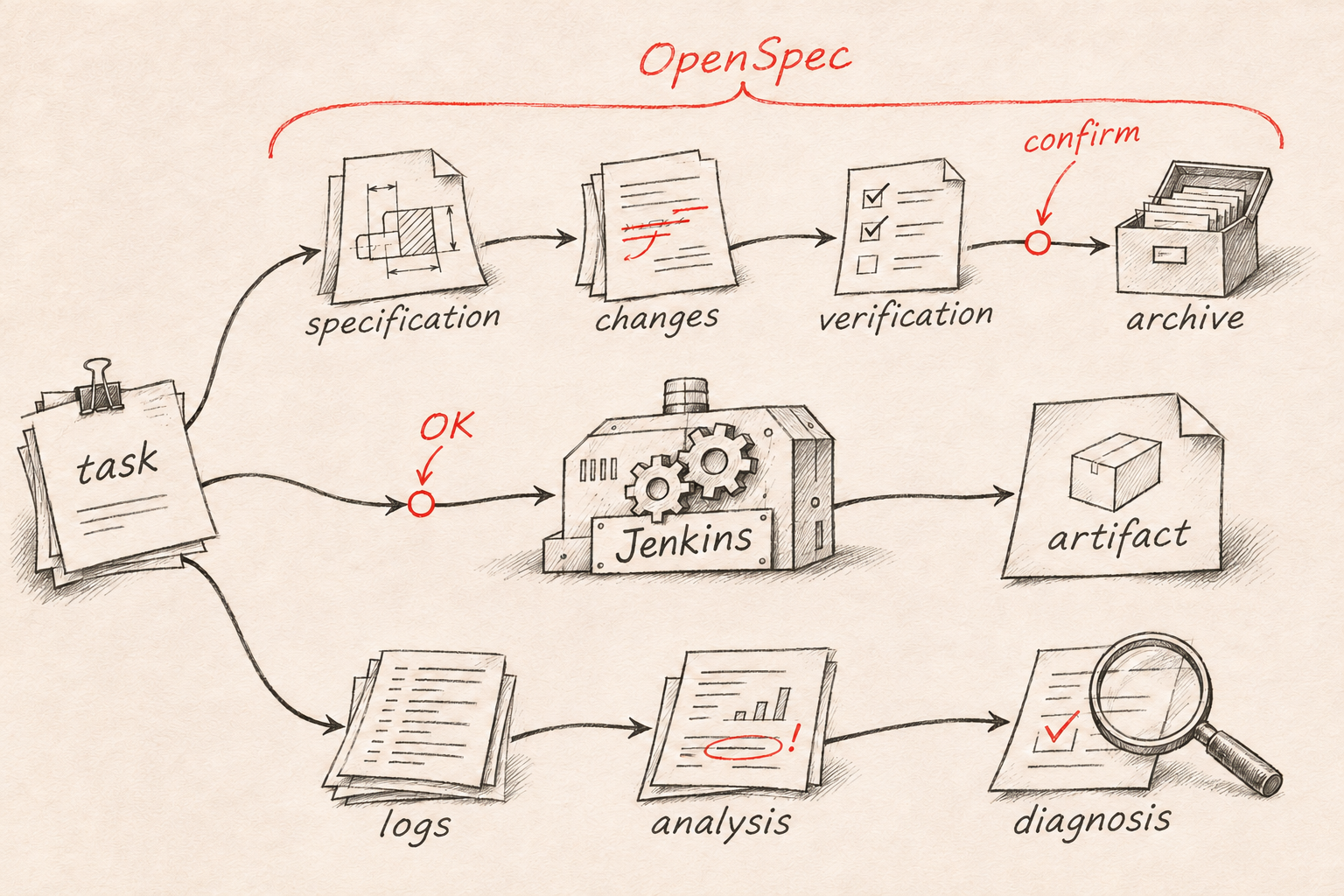
OpenSpec lets you revisit requirements and technical decisions during implementation. I use this iterative workflow alongside my DevOps skill package.
In the package, the OpenSpec cycle is included in workflows that change the system's specified behaviour. Standalone builds and log analysis do not create a new OpenSpec change.
Demos and guided work
Once the hub and master specification were ready, I trained the team in the new workflow. I also covered Git with the analysts.
Some analysts worried about breaking something in the repository. It was unclear what they could delegate to the agent and how to check its output. They needed to get used to stating their intent and understand what the files were for.
During internal meetups, I took the analyst's role and demonstrated how I worked through a task in the hub. After the demos, I continued supporting the analysts as they started using it.
Collecting metrics
I set up metric collection through hooks: skills trigger the hooks, and statistics are sent to dashboards.
We collected data on OpenSpec skill usage by role and the effort spent working with an agent. A survey asked how much effort the same task would have taken manually.